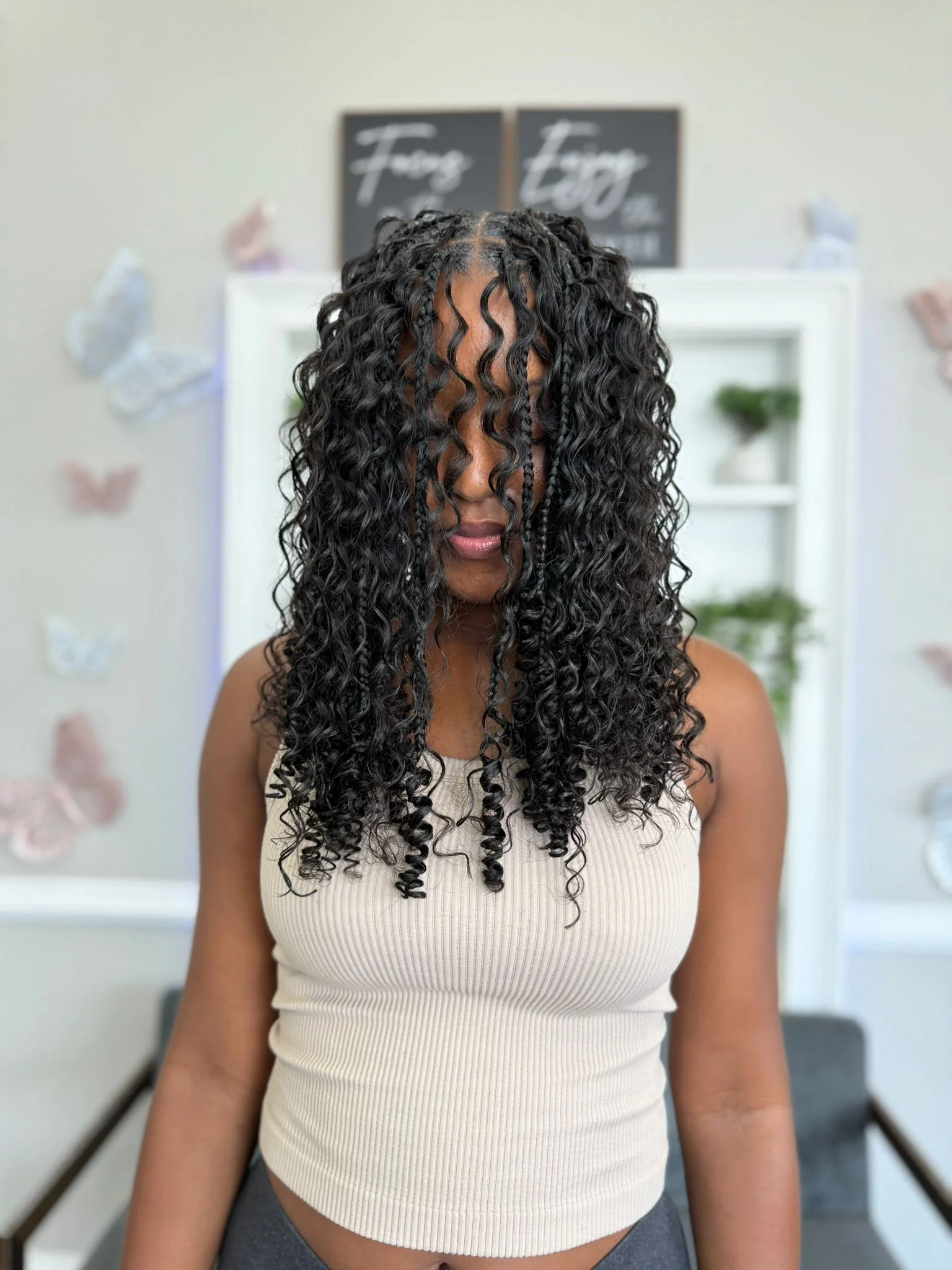
You just left the chair at Afro Luxe Braiding Bar with a fresh set of knotless braids — scalp clean, parts crisp, edges laid. Now what? How you treat your braids in the next 24 hours, the next week, and the next two months will determine everything: how long they last, how healthy your natural hair is underneath, and whether you walk back through our doors in Laurel, MD for a refresh or an emergency removal.
The truth is, most clients put enormous thought into getting their knotless braids and almost none into keeping them. That is where the style lives or dies. Maryland summers bring serious humidity. DMV winters are drying. And whether you are commuting into D.C., running after your kids in Bowie, or pulling long shifts — you need a protective style that can keep up with your life without constant attention.
This guide gives you everything you need: a daily routine, a washing method, nighttime protection habits, and the signs that it is time to come back to your braiding salon in Laurel, MD for a fresh install. Written with input from our founder, Dr. Bridget Kaspa, PharmD, MSc — a pharmacist and cosmetic formulation chemist who built every Afro Luxe service protocol around one goal: keeping your natural hair as healthy as the day it went in.
What Are Knotless Braids and Why Does Aftercare Matter?
Knotless braids — also called feed-in braids — are a protective style where your stylist begins each braid with your own natural hair before gradually feeding in braiding hair. The result is a seamless, knot-free root that lies flat against your scalp, moves naturally, and places far less tension on your hairline than traditional box braids.
That tension difference is significant. Traditional box braids anchor synthetic hair to your root with a tight knot, creating a constant pulling force on the follicle. Over time — especially if the braids are left in too long or the installation is heavy — this leads to traction alopecia: hairline recession that can become permanent. Knotless braids largely eliminate that risk when installed correctly.
But “installed correctly” is only half the equation. The other half is what happens at home. Your scalp still produces sebum. Product buildup still accumulates. Maryland humidity still creates frizz. Without a consistent aftercare routine, even the best knotless braids installation will look lived-in by week three and genuinely ragged by week six. Here is how to avoid that.
Daily Knotless Braids Aftercare Routine
Knowing how to maintain knotless braids starts with building a simple daily habit — not an elaborate one. The goal is scalp hydration and frizz control, not a full product regimen.
Every day:
- Lightly mist your scalp with a water-based braid refresher spray or plain distilled water — focus on the roots, not the length of the braid
- Follow with 2–3 drops of a lightweight oil: jojoba, sweet almond, or argan work well because they absorb rather than sit on the surface
- Smooth flyaways along your hairline with a small amount of edge control — do not cake it; a thin layer is enough
Every 2–3 days:
- Check your parts for buildup, especially if you use dry shampoo or styling products
- Gently massage your scalp with fingertips (not nails) to stimulate circulation and distribute oils
Avoid:
- Heavy butters or thick creams applied directly to the braids — they cause white residue and trap debris
- Over-oiling; more is not better; flooding the scalp with oil creates buildup that requires aggressive washing to remove
- Rubbing your braids against each other when trying to dry or refresh them; this is the fastest way to create irreversible frizz
The Maryland climate adds one complication: summer humidity will cause your braids to swell slightly and your natural hair at the root to revert faster. In those months, reduce how often you mist and lean on a silk scarf or bonnet when you are outdoors for extended periods.
How to Wash Knotless Braids Properly
The most common question we get at our Laurel, MD braiding studio: “Can I wash my knotless braids?” Not only can you — you should. Skipping washes allows sweat, oil, and buildup to accumulate at the scalp and inside the braids, which causes odor, itching, and — critically — scalp conditions that can affect your hair health underneath.
Wash frequency: Every 2–3 weeks is the sweet spot. More than that loosens the braids and accelerates frizz. Less creates unhealthy scalp conditions.
How to wash knotless braids without frizz — step by step:
- Dilute your shampoo. Mix one part sulfate-free shampoo with three parts water in an applicator bottle. Concentrated shampoo causes tangling and is too harsh on the braiding hair.
- Section your braids. Work in four quadrants — two front, two back — so you address the whole scalp evenly without the braids tangling together.
- Apply to scalp only. Point the applicator bottle tip directly at your scalp between the parts and squeeze. Do not rub the shampoo into the length of the braid.
- Gently scrub with fingertips. Use the pads of your fingers in a kneading motion — never scratch with nails, which can traumatize the scalp and disrupt your parts.
- Rinse thoroughly. Hold each section under cool-to-lukewarm water (never hot — heat opens the cuticle and accelerates frizz). Make sure no shampoo remains at the root.
- Follow with a diluted leave-in conditioner. Same technique — applied to the scalp, not saturated into the braids.
- Dry completely before styling. This is non-negotiable. Braids that dry while bundled or wrapped retain moisture against the scalp, which leads to mildew smell and scalp irritation. Sit under a hooded dryer on low heat, or let them air dry fully before putting them up or going to sleep.
How to Sleep with Knotless Braids
Nighttime is where most people unknowingly destroy their braids. Friction from a cotton pillowcase is one of the single biggest causes of frizz, edge breakage, and a style that looks weeks older than it is.
How to protect braids at night:
- Satin bonnet: The standard for a reason. A large satin bonnet accommodates all braid lengths and creates zero friction against the hairline or length. Buy a large-size bonnet — cramming braids into a small one creates bend marks at the nape.
- Satin pillowcase: A good backup if bonnets come off in your sleep. Not as effective as a bonnet, but far better than cotton.
- Loose pineapple (for longer braids): Pull all braids into a very loose high ponytail at the very top of your head using a satin scrunchie — not an elastic. This keeps the ends off your pillow while leaving the roots relaxed.
What to avoid:
- Tight buns or ponytails while sleeping — the constant tension on one spot of your hairline overnight adds up to edge stress
- Leaving braids completely loose against a cotton pillow
- Going to sleep with damp braids — a bonnet over wet hair creates the same mildew risk as damp towels
How Long Do Knotless Braids Last — and When to Refresh
Knotless braids installed at Afro Luxe Braiding Bar in Laurel, MD are designed to last 6–8 weeks with proper care. Small braids on the longer end, jumbo on the shorter. Here is the honest breakdown:
| Braid Size | Expected Longevity |
|---|---|
| Small knotless braids | 8–10 weeks |
| Medium knotless braids | 6–8 weeks |
| Jumbo knotless braids | 4–6 weeks |
Signs it is time to book your refresh:
- Your new growth (the gap between your scalp and where the braid begins) is more than ¾ inch — at this point tension begins to shift to the new growth, increasing breakage risk
- The braids have become matted or tangled at the ends and cannot be detangled with your fingers
- You feel persistent itching or scalp tenderness that washing does not resolve
- The braids look visibly thin at the root — a sign your natural hair has begun to shed from the base
Leaving knotless braids in beyond 10 weeks — regardless of size — is where real damage happens. Shed hair that cannot escape the braid wraps around your natural hair shaft, creating knots that lead to significant breakage during removal. Do not let aesthetics or scheduling override the timeline.
When you are ready, book your knotless braids appointment online, or call us at (301) 792-2121. Walk-ins are always welcome, and we offer same-day availability and early morning appointments starting at 6 AM.
Knotless Braids Aftercare for 4C Hair
Knotless braids aftercare for 4C hair requires one additional focus above everything else: moisture retention. Type 4C hair has the tightest curl pattern of any hair type, which means the cuticle is naturally raised, sebum from your scalp struggles to travel down the hair shaft, and moisture evaporates faster than in looser curl patterns. Inside braids, that challenge does not disappear — it just becomes less visible.
Specific tips for 4C natural hair inside knotless braids:
- Mist more frequently. 4C hair dries out faster, particularly in winter. A daily scalp mist is important, not optional.
- Seal with oil after every moisture application. Water (or water-based spray) first, lightweight oil second. The LOC method — Liquid, Oil, Cream — adapted for braids means: mist, a few drops of jojoba or argan, and a small amount of a thin moisturizing cream at the root only.
- Pay attention to your edges. 4C hairlines tend to be finer and more fragile. Edge control applied directly to baby hairs should be minimal — if you feel your edges pulling or tightening, that is a signal the product has dried and is causing tension. Mist and gently smooth rather than reapply product.
- Protect against breakage at removal. When it is time to take braids down, soak each braid with a generous amount of conditioner or detangling spray before working from tip to root. Rushing a 4C natural hair removal is a fast track to significant breakage.
Common Mistakes That Ruin Knotless Braids
These are the habits we see most often that shorten the life of an installation and damage the hair underneath.
1. Over-oiling the scalp.
More oil does not mean more moisture. Heavy application of thick oils or butters coats the scalp, traps debris, and requires aggressive washing to remove — which loosens the braids and accelerates frizz. Use lightweight oils sparingly.
2. Skipping nighttime protection.
One night on a cotton pillowcase causes friction damage that takes no time to create and a week to recover from. Make the bonnet non-negotiable — not most nights, every night.
3. Keeping braids in too long.
This is the most common mistake and the most damaging. Shed hair accumulates inside the braid, new growth becomes tangled into the base, and what should be a simple takedown becomes a slow, painful detangling session with significant breakage. Respect the timeline.
4. Washing too aggressively.
Rubbing shampoo into the full length of a braid causes the strands to lock together and creates permanent frizz that no product will smooth out. Always work scalp-only with diluted product.
5. Pulling hair back too tightly.
High-tension ponytails and buns while braided add stress to a hairline that is already carrying the weight of extensions. When you style your braids up, use a satin scrunchie and keep the ponytail loose enough to move.
When to Visit a Braiding Salon in Laurel, MD for Maintenance
Some things you can handle at home. Others are worth a trip to your stylist. Here is how to know the difference.
Come see us at Afro Luxe Braiding Bar if:
- Your braids are at or past their recommended lifespan and you need a fresh install
- Your scalp has developed persistent itching, flaking, or tenderness that does not improve with washing — this could indicate a scalp condition that needs professional assessment
- You have noticed visible thinning at the hairline or temples — a sign of tension stress that needs immediate attention
- Your braids have matted or fused at the ends and you are not confident removing them without causing breakage
As a braiding salon in Laurel, MD led by a pharmacist and cosmetic formulation chemist, Afro Luxe approaches every appointment with your hair’s long-term health in mind — not just the look you are leaving with. Dr. Kaspa’s training means we catch the early signs of tension damage, traction alopecia risk, and scalp imbalance before they become serious problems.
We also offer walk-in and same-day appointments for when life does not allow for planning ahead, and early morning slots starting at 6 AM for DMV commuters and early risers across Prince George’s County, Howard County, and Montgomery County.
Read what our clients say about their experience →
Conclusion: Your Braids Are an Investment — Protect Them
Knotless braids done well are one of the best protective styles available for natural hair. They are gentle at the root, visually stunning, and low-maintenance — but only if you put in the small daily effort that keeps them that way.
To recap the essentials: mist and lightly oil your scalp daily, wash with diluted shampoo every 2–3 weeks focused on the scalp only, sleep in a satin bonnet every night without exception, and take your braids down at or before 10 weeks regardless of how they look.
Wearing box braids instead? Our box braids aftercare guide covers the scalp routine, itch relief, and frizz fixes for that style.
When you are ready for a fresh install — knotless braids, boho braids, box braids, or any of our 12 protective styles — the team at Afro Luxe Braiding Bar in Laurel, Maryland is ready for you. Book your appointment online, call us at (301) 792-2121, or simply walk in. We are open 7 days a week, including early morning appointments starting at 6 AM.
Your crown deserves expert hands. We will see you in the chair.