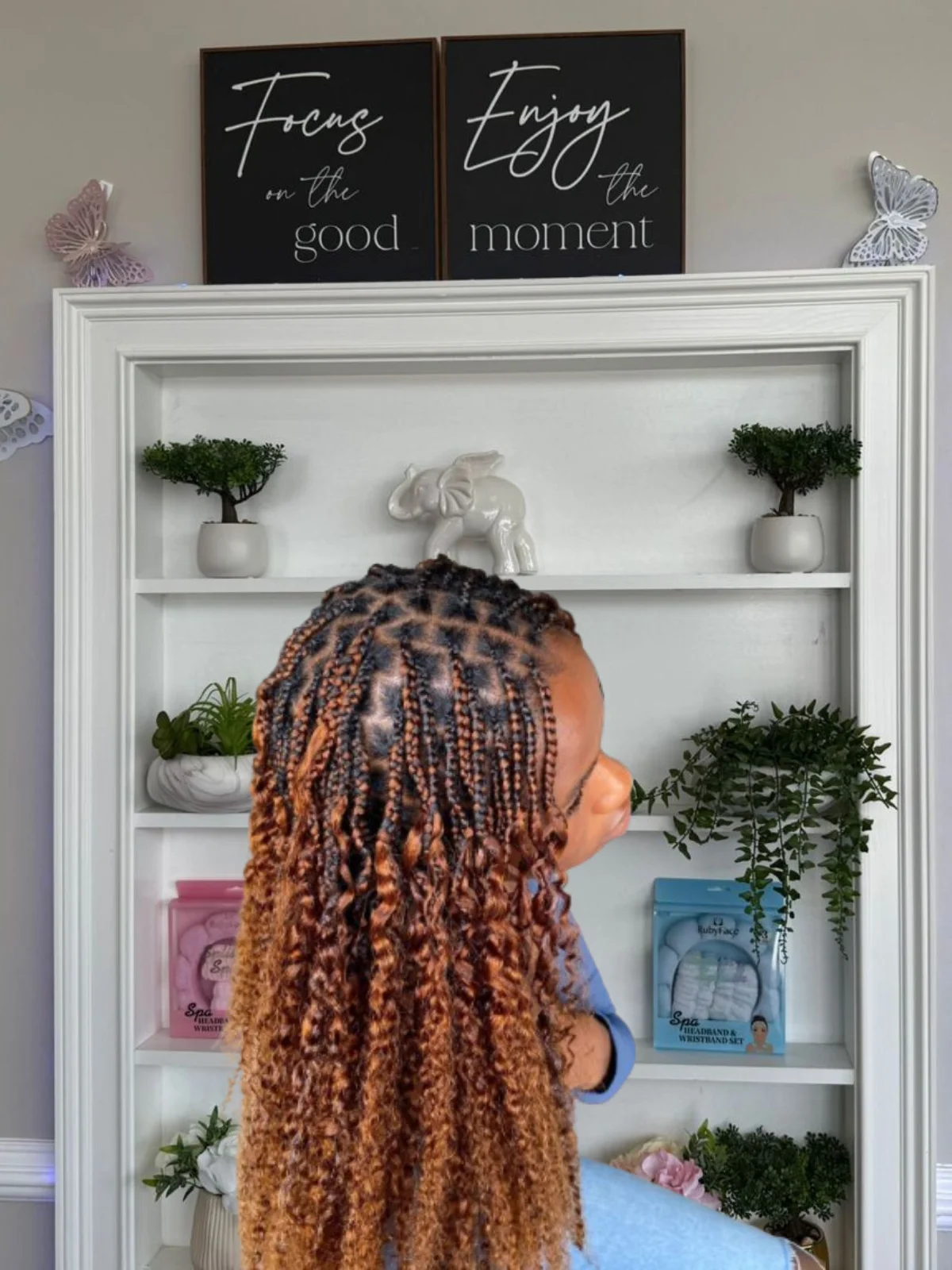
Box braids are one of the most reliable protective styles you can wear — but “reliable” only holds up if the six to eight weeks between install and removal are handled right. The braids themselves aren’t fragile. What’s fragile is the natural hair and scalp underneath them, and that’s exactly what good box braids aftercare protects. Here’s exactly how to get the full lifespan out of your box braids without sacrificing scalp health.
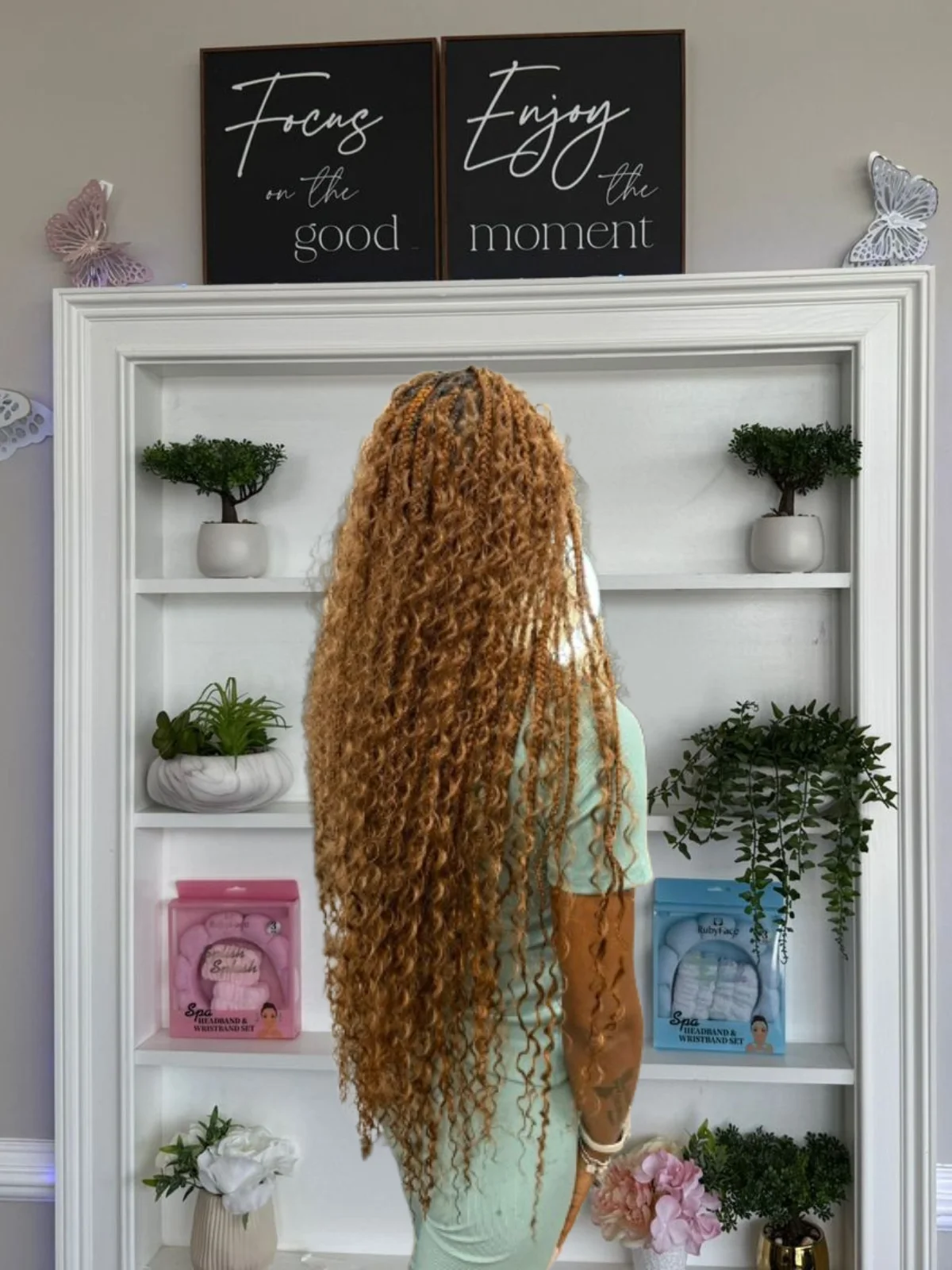
The First 48–72 Hours: Let Your Scalp Settle
Give your scalp a full 48–72 hours before doing much of anything. Keep your braids dry and skip heavy products while the parts set and the tension your scalp just experienced starts to ease. Some tenderness is normal, and a few clients notice mild itching or a slight burning sensation in the first day or two — that’s usually the alkaline coating on synthetic braiding hair reacting with your scalp’s natural pH (the reason we’re developing scalp-safe braiding hair), not a sign anything went wrong. It typically fades on its own within a few days; the section below has fast relief if it doesn’t.
Week 3–6: Your Box Braids Aftercare Routine
This is the stretch where your routine matters most:
- Cleanse your scalp every 1–2 weeks with a diluted, sulphate-free shampoo or a scalp rinse — never fully soak the braids themselves, which slows drying and invites buildup or mildew at the root.
- Moisturise the scalp 2–3 times a week with a lightweight oil (jojoba and argan both work well). Keep the moisture at the scalp, not on the braid shafts — oil on the braids themselves just attracts dust and shortens how fresh they look.
- Sleep in a satin bonnet or on a satin pillowcase every night. This single habit does more to prevent frizz and edge damage than any product.
Why Your Scalp Might Itch (And How to Fix It Fast)
An itchy scalp is the single most common box braids complaint, and it almost always comes down to one of three causes:
- The braiding hair’s alkaline coating reacting with your scalp — most common in the first few days
- Product buildup from sweat, dust, and skipped scalp cleansing
- Tension at the root, especially with smaller or tighter braids — one reason many clients switch to lighter-weight knotless braids
Fast relief that won’t undo your style:
- Spray a diluted apple cider vinegar and water mix (roughly 1 part ACV to 4 parts water) directly onto the scalp to neutralise the alkalinity — especially effective in the first week
- Use a witch hazel or scalp-specific serum between full washes to cut buildup without soaking the braids
- Skip heavy oils and butters at the root — they feel soothing for a day, then build up and make itching worse. Save richer products for the hair ends only.
- If itching comes with redness, bumps, or real pain rather than mild irritation, that can signal folliculitis or a reaction to the extension hair — stop self-treating and call us so our Hair & Scalp Clinic can take a look.
How to Refresh Frizzy Box Braids Between Washes
A little frizz at the roots and edges is normal by week 3 or 4 — here’s how to revive the look without a full redo:
- Dampen a towel with hot (not scalding) water, wring it out, and lay it over your braids for a minute or two. The warm, slightly damp heat relaxes flyaways and instantly smooths the surface.
- While braids are still slightly damp, smooth a small amount of lightweight oil between your palms and glide it over the length — this locks the smoother look in place.
- For stray fuzzy ends, carefully trim only the loose synthetic fibres with small scissors — never your natural hair. Take a photo of your braids on day one so you always know where your hairline ends and the extension begins.
- If frizz is concentrated at the part lines, a light touch of edge control on the scalp — not the braid itself — sharpens the look instantly.
Week 6–8: Watching for Overdue Signs
Box braids should come out no later than 8 weeks — the same 6–8 week window the American Academy of Dermatology recommends to prevent traction hair loss. Past that window, new growth at the root increases tension on the hair shaft, and the risk of matting and unnecessary breakage rises sharply. If you notice significant new growth, a swollen or itchy scalp, or the braids feeling unusually heavy, that’s your cue to book a removal or refresh — don’t wait for the calendar. Weighing a fresh full set versus a touch-up? Our full pricing guide breaks down both.
Common Mistakes That Cut Box Braids Short
- Skipping scalp cleansing entirely because you’re worried about frizz — buildup is a bigger risk to scalp health than a little frizz
- Over-moisturising the braid shafts instead of the scalp, which leaves them looking dull and weighed down
- Swimming without a protective cap — chlorine and salt water dry out both your natural hair and the braiding hair; if you do swim, rinse with fresh water immediately after and let braids dry fully before tying them up
- Wearing them past 8 weeks hoping to “squeeze out” another few weeks
- Ignoring day-one itching or burning instead of treating it — see the scalp relief tips above
Wearing a different style? Our knotless braids aftercare guide covers the lighter-tension version, and boho braids follow the same scalp-first routine with extra attention on their curly ends.